
Managing a youth swim club is a rewarding but demanding responsibility. Between organizing training sessions, communicating with parents, tracking attendance, and managing membership fees, the administrative workload can quickly become overwhelming. For many coaches and club administrators, the passion for developing young swimmers is often overshadowed by the endless paperwork and logistical challenges. This comprehensive guide will walk you through proven strategies to streamline your swim club’s operations, improve parent communication, and focus on what truly matters: helping your athletes succeed in the pool.
The reality of running a youth swim club is that it requires a delicate balance of coaching expertise and business acumen. Coaches are trained to teach stroke mechanics, build endurance, and prepare athletes for competition. However, they are rarely taught how to manage the complex administrative tasks that keep a club running smoothly. From coordinating pool time and managing coaching staff to ensuring timely fee collection, the operational demands can lead to burnout if not managed effectively.
To overcome these challenges, modern swim clubs are increasingly turning to digital solutions to automate and simplify their daily tasks. By moving away from manual, paper-based processes, clubs can save valuable time, reduce errors, and create a more professional experience for both parents and athletes. In this guide, we will explore the key areas of swim club management and provide actionable tips to help you build a more efficient and successful organization.
Streamlining Membership and Registration
The foundation of any successful swim club is a smooth and efficient registration process. For years, clubs relied on paper forms, checks, and manual data entry to enroll new members. This approach is not only time-consuming but also prone to errors, lost paperwork, and delayed payments. Today, parents expect a seamless digital experience when signing their children up for sports activities.
Implementing an online registration system is the first step toward modernizing your club. A digital platform allows parents to easily input their child’s information, sign waivers electronically, and submit payments securely from their smartphones or computers. This eliminates the need for coaches to chase down paper forms and manually update spreadsheets, freeing up valuable time that can be better spent on deck.
When choosing a registration system, look for a solution that offers customizable forms to capture specific information relevant to your club, such as medical conditions, emergency contacts, and previous swimming experience. Additionally, ensure the platform integrates with your payment gateway to facilitate automatic billing and fee collection. By streamlining the registration process, you can create a positive first impression for new families and set the tone for a well-organized and professional club.
Effective Parent Communication
Clear and consistent communication with parents is crucial for the success of any youth sports organization. Parents are investing their time and money into your club, and they want to be kept informed about their child’s progress, schedule changes, and upcoming events. However, managing communication for a large group of families can be a logistical nightmare if you rely on fragmented methods like email, text messages, and social media groups.
To improve parent communication, establish a centralized platform where all club-related information is easily accessible. This could be a dedicated club app or a secure portal on your website. Use this platform to share training schedules, meet information, and important announcements. By providing a single source of truth, you can reduce confusion and minimize the number of inquiries from parents.
It is also important to set clear expectations regarding communication from the outset. During the registration process or at a pre-season parent meeting, outline the preferred channels of communication and establish guidelines for when and how parents should contact coaches. For example, you might designate specific times for coaches to be available for questions or require parents to schedule appointments for more in-depth discussions. By setting these boundaries, you can ensure that communication remains respectful and productive while protecting your coaches’ valuable time. For more on this topic, see our guide on how technology can turn sideline conflict into collaboration.
Tracking Attendance and Progress
Monitoring attendance and tracking swimmer progress are essential components of a well-managed swim club. Consistent attendance is critical for athletic development, and tracking it allows coaches to identify patterns, address absenteeism, and ensure that swimmers are meeting the requirements for their respective training groups. Similarly, tracking progress helps coaches evaluate the effectiveness of their training programs and provides tangible evidence of improvement to both athletes and parents.
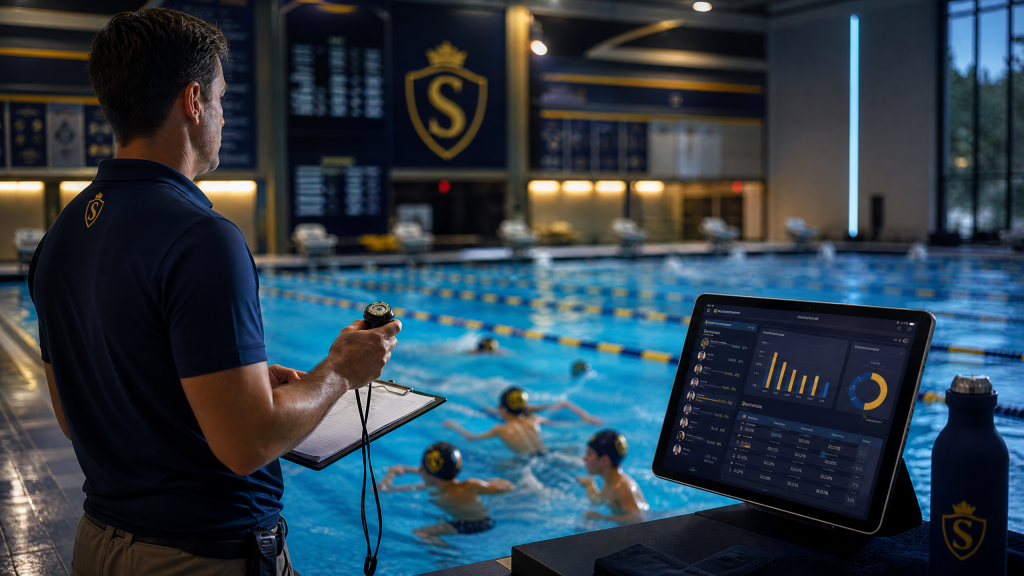
Historically, coaches relied on paper attendance sheets and manual record-keeping to track these metrics. This approach is not only inefficient but also makes it difficult to analyze data and share insights with parents. Digital attendance tracking tools offer a more streamlined solution, allowing coaches to quickly mark attendance on a tablet or smartphone directly from the pool deck. This real-time data can then be easily accessed by club administrators to monitor overall attendance trends and identify areas for improvement.
When it comes to tracking progress, consider implementing a system that allows coaches to record personal bests, stroke technique evaluations, and other performance metrics. Sharing this information with parents on a regular basis can help them understand their child’s development and reinforce the value of your club’s training program. Additionally, celebrating milestones and achievements, no matter how small, can boost swimmer morale and foster a positive and supportive team culture. Our article on how to track progress for young athletes without overwhelming them offers practical advice you can apply directly to your swim club.
Managing Membership Fees and Finances
Financial stability is essential for the long-term viability of any youth swim club. Managing membership fees, collecting payments, and tracking expenses can be a daunting task, especially for clubs that rely on manual invoicing and check processing. Late payments and administrative overhead can strain a club’s resources and create unnecessary tension between coaches and parents.
To streamline financial management, transition to an automated billing system that allows parents to set up recurring payments using their credit cards or bank accounts. This ensures that fees are collected on time, every time, reducing the need for awkward conversations and manual follow-ups. Automated billing also provides parents with a convenient and predictable payment schedule, making it easier for them to budget for their child’s swimming expenses. For a deeper dive into this topic, read our guide on how to collect membership fees without the awkward conversations.
In addition to automating fee collection, it is important to establish clear financial policies and communicate them effectively to parents. This includes outlining the cost of membership, payment deadlines, refund policies, and any additional fees associated with meets or equipment. Transparency is key to building trust and avoiding misunderstandings. By implementing robust financial management practices, you can ensure that your club has the resources it needs to provide high-quality coaching, maintain facilities, and support the development of your athletes.
Creating a Positive Club Culture
A strong and positive club culture is the bedrock of a successful youth swim team. It is the intangible element that fosters teamwork, sportsmanship, and a lifelong love of swimming. Creating this culture requires intentional effort from coaches, administrators, and parents alike. It starts with establishing clear core values and ensuring that these values are reflected in every aspect of the club’s operations.
Coaches play a pivotal role in shaping club culture. They must lead by example, demonstrating respect, fairness, and a commitment to the holistic development of their athletes. Encourage coaches to focus on personal growth and effort rather than solely on winning. By creating an environment where swimmers feel supported and valued, regardless of their skill level, you can build a resilient and cohesive team.
Parent involvement is also crucial for cultivating a positive club culture. Encourage parents to volunteer at meets, participate in fundraising events, and support the team’s activities. However, it is equally important to educate parents on appropriate sideline behavior and the importance of allowing coaches to coach. By fostering a collaborative and respectful relationship between coaches and parents, you can create a unified community that works together to support the athletes and the club as a whole.
Seasonal Planning and Periodization for Swim Clubs
Effective seasonal planning is a hallmark of well-run swim clubs. Periodization — the systematic planning of training to peak at the right time — is a concept well understood in elite swimming but often overlooked at the youth club level. For young swimmers, thoughtful periodization means structuring the training year into distinct phases: a base-building phase focused on technique and aerobic capacity, a competition phase with higher intensity and race-specific work, and a recovery phase to allow physical and mental regeneration.
From an administrative perspective, seasonal planning requires coordinating pool bookings, scheduling competitions, arranging travel for away meets, and communicating the calendar to parents well in advance. A digital scheduling tool that integrates with your club’s communication platform can make this process significantly more manageable. When parents receive the season calendar at the start of the year, they can plan family commitments around key competitions and training camps, reducing last-minute absences and scheduling conflicts.
It is also worth building flexibility into your seasonal plan. Injuries, illness, and unexpected facility closures are inevitable in any sports club. Having contingency plans and the ability to quickly communicate changes to parents and athletes will minimize disruption and demonstrate the professionalism of your organization. For guidance on building a robust training schedule, our article on how to create a training schedule for a sports club is an excellent starting point.
The Role of Technology in Modern Swim Clubs
The landscape of youth sports management is rapidly evolving, and technology is playing an increasingly central role. From streamlined registration and automated billing to advanced communication platforms and performance tracking tools, digital solutions are transforming the way swim clubs operate. Embracing these technologies is no longer a luxury but a necessity for clubs that want to remain competitive and provide the best possible experience for their members.
By adopting comprehensive club management software, administrators can centralize their operations, reduce administrative overhead, and gain valuable insights into the club’s performance. These platforms offer a suite of tools designed specifically for the unique needs of sports organizations, allowing you to manage everything from scheduling and attendance to finances and communication in one place. Our comprehensive overview of sports club management software can help you evaluate your options.
As you consider implementing new technologies, prioritize solutions that are user-friendly and accessible for both your staff and your members. Provide adequate training and support to ensure a smooth transition, and be open to feedback from coaches and parents. By leveraging the power of technology, you can free yourself from the burden of paperwork and focus your energy on what truly matters: developing the next generation of swimmers and building a thriving, successful club.